Category
Payables & Receivables
April 16, 2026

.jpg)
Latest from the Blog
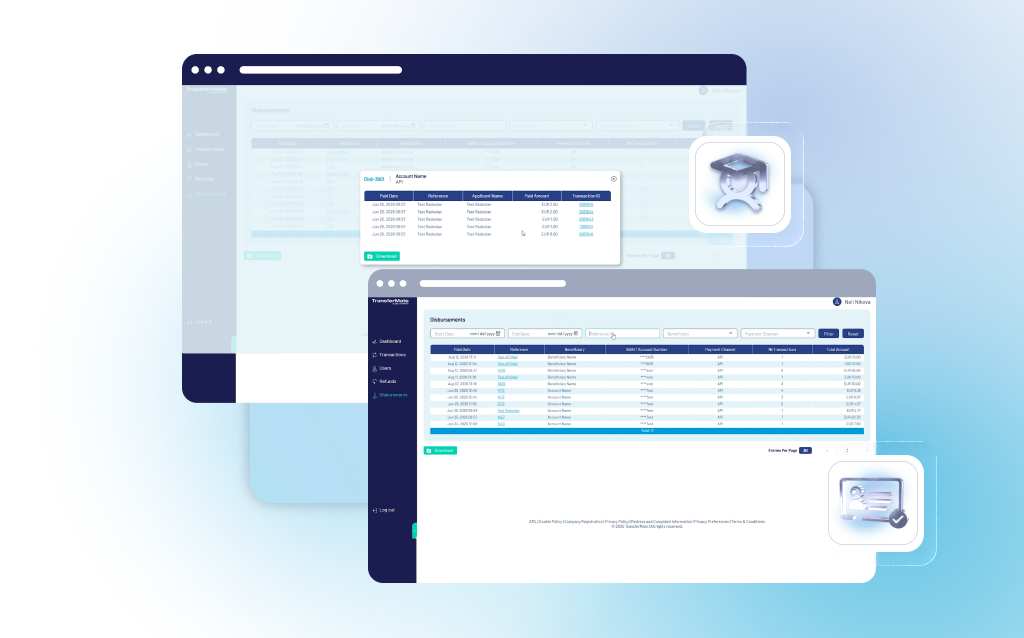
TransferMate Education API Dashboard Update: Disbursements Visibility

TransferMate and Serrala Partner to Bring Global Payments into Finance Automation Workflows

Turning Receivables into a Strategic Asset
For years, businesses talked about “digital transformation” as though it were a destination. But the real shift, the one reshaping how money actually moves, is happening underneath the surface.
Software is becoming the environment where financial activity lives. International foreign exchange (FX) payments and treasury operations are becoming part of platforms, giving rise to a world powered by embedded financial services.
And within that shift, embedded payments, especially for cross-border flows, are becoming one of the most transformative levers of efficiency and growth.
.png)
The global rise of embedded finance is staggering. Analysts project the sector to grow from USD 85.8 billion in 2026 to USD 370.9 billion by 2036, driven largely by business-to-business (B2B) commerce and software companies’ ability to integrate financial tools directly into their ecosystems.
By keeping payments within the platforms that businesses already use - such as ERP, procurement, and business management platforms - companies can reduce friction and unlock new revenue streams.
In particular, the shift in B2B payment technology is accelerating. Businesses increasingly expect financial interactions to happen in one place rather than across multiple providers.
Companies want to automate reconciliations, eliminate manual processes, and simplify cross-border movement in ways traditional banking infrastructure was never designed to support. Embedded solutions make this possible by enabling payments to occur natively within the systems where invoices are created and expenses are approved.
Financial tools are moving to where the work happens - a unified platform that supports the payment execution side alongside initiation and administration elements.

While domestic payments have modernized quickly, cross-border payments remain complex, still burdened by multistep correspondent banking, delays, and unpredictable fees.
The global cross-border payments market is set to grow significantly through to 2034, driven by global trade expansion and demand for faster, low-cost settlement.
Businesses now expect what consumers take for granted: speed, clarity, and transparency.
As global commerce accelerates, the old model simply doesn’t scale. This is why embedded solutions, particularly in international B2B contexts, are being adopted at record rates.

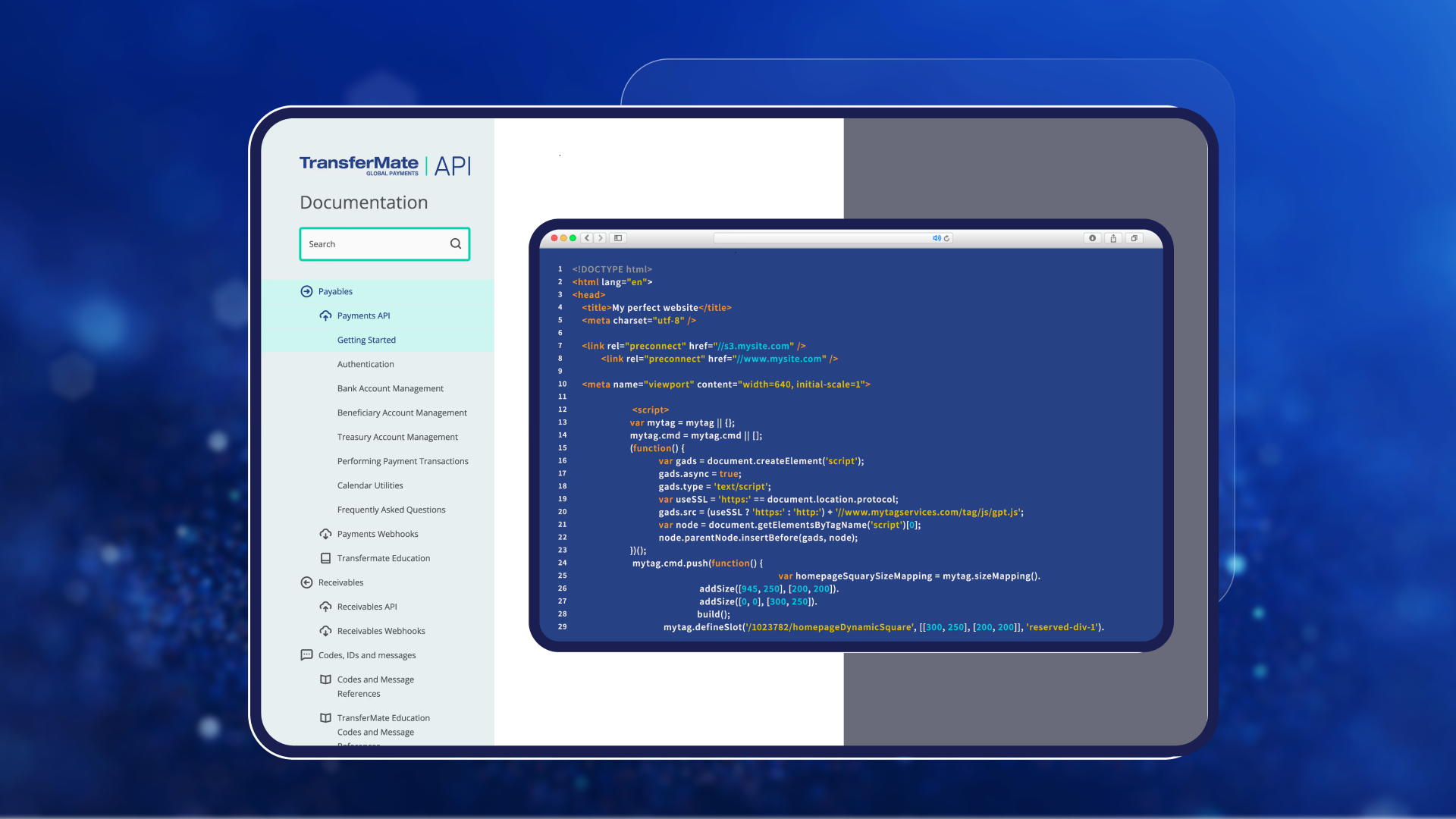
In a connected ecosystem, APIs are the bread and butter of integrations. They enable financial capabilities such as payments, FX, and compliance checks to appear seamlessly within platforms. The growth of API-based payment technology reflects a broader movement: companies want financial operations to be invisible and automated.
Businesses benefit when they don’t redirect users off their platforms to complete payments. A unified journey leads to faster settlement and a better user experience. Both of which promote client stickiness, resulting in positive feedback loop.
B2B payments are shifting from fragmented workflows to deeply embedded, automated, API-driven systems that remove friction from procurement, billing, payments, and more.

As the world reorganizes around embedded finance, TransferMate provides the infrastructure to make truly global embedded payments possible.
Instead of businesses stitching together multiple banking relationships across dozens of countries, a single integration with TransferMate unlocks access to our regulated network, built on the world’s largest portfolio of fintech payments licenses.
This is what turns embedded payments from a feature into a strategic advantage.
With coverage of 200+ countries and territories and availability in 140+ currencies, TransferMate enables businesses to access global payment capabilities without building their own global banking infrastructure. This is critical for platforms that need to move funds across borders reliably, transparently, and at scale.
APIs plug the platform directly into TransferMate’s network, making global payments feel local, fast, and predictable. For users, the experience is seamless. For our partners, that capability becomes a competitive differentiator.
Across industries, companies are turning to embedded solutions to reduce costs and improve margins. TransferMate offers preferential FX rates and low-cost international transfers, a major benefit in markets where international FX payments can quickly eat away at profitability.
With markups reduced and intermediary banks removed from the chain, businesses gain clarity and control over their global money transfer flows.
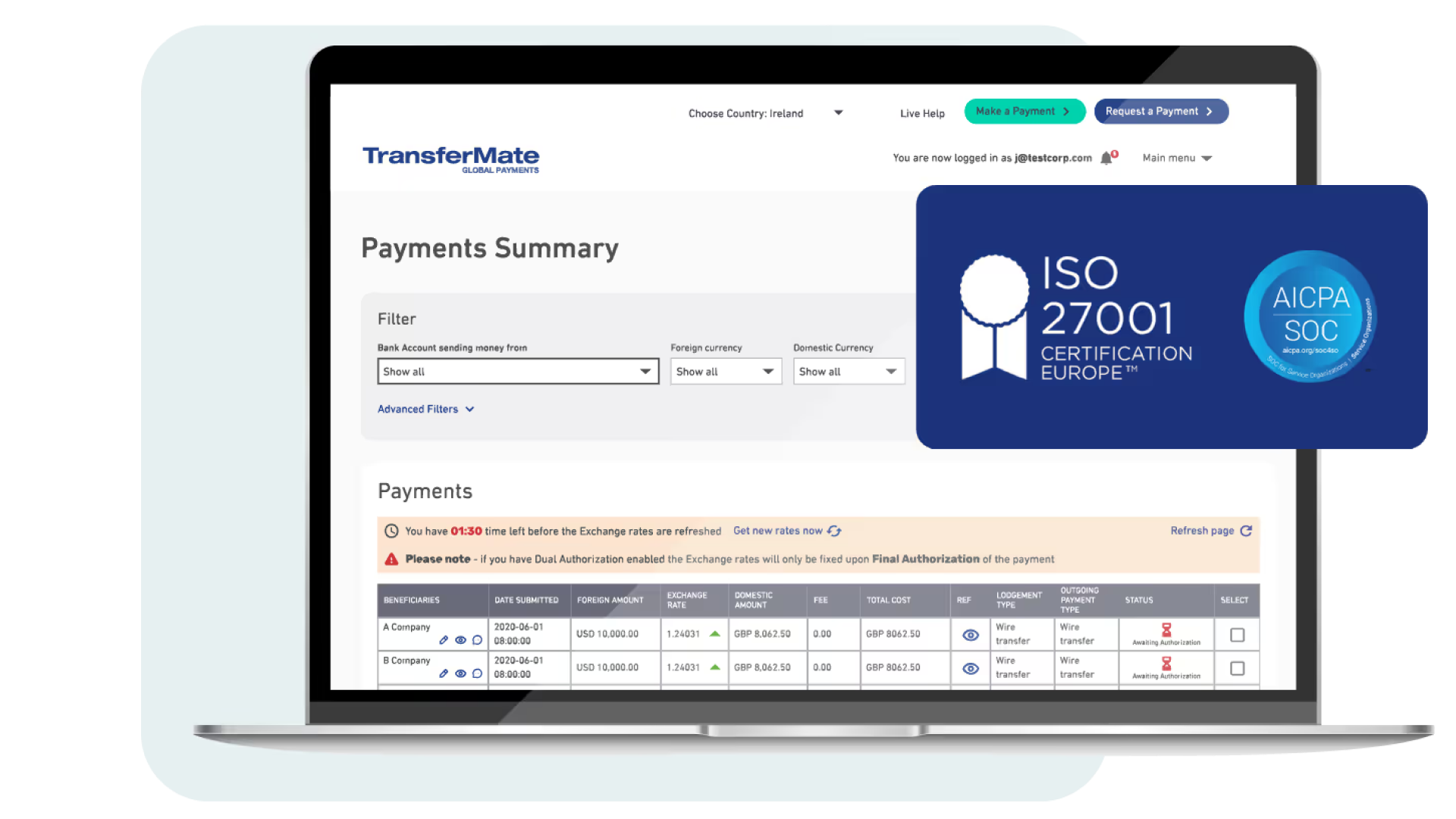
Global payments come with layers of regulation: anti-money laundering (AML) and Know-Your Customer (KYC) checks, data rights, jurisdiction-specific rules, and licensing requirements. Many companies simply don’t have the resources to manage this at scale.
TransferMate removes that burden. Its infrastructure is underpinned by 100 regulatory licenses, enabling businesses to operate across borders with confidence, without directly holding licenses (or bank accounts) in every market themselves.
The provider handles the complexity, not the platform.
Embedded payments create stickier platforms, and that’s reflected in the data. PYMNTS reports that 54% of B2B platforms see direct revenue gains from embedded finance, with 83% already offering embedded payments as their primary feature.
TransferMate’s partners experience this firsthand. By keeping payments inside their workflows, they gain:
Embedded payments turn the platform from a tool into an end-to-end solution.

The next wave of global payment solutions will be invisible.
The winners will be the platforms that embed payments deeply as first movers.
TransferMate is positioned at the centre of that transition. With a regulated global network, API-driven infrastructure, and a track record of powering thousands of businesses, it is enabling the shift toward a world where cross-border payments are a seamless extension of how global business operates.
If you’re building software that needs payments to be seamless, scalable, and truly global, TransferMate can help. Get in touch to explore how embedded payments can become a strategic advantage for your platform.
We simplify, digitize, and automate the manual tasks involved in paying and getting paid.